
Listen to this article
Read by Dr. Lynn Austin
This year I was honored to be selected to present at our faculty professional development summit. The opportunity to submit a proposal came not long after I completed my doctorate, a 3.5-year journey that had just closed. I want to be honest about what that timing actually felt like, because it is the real starting point of this story.
I was busy. I had a number of projects moving at once, and I had just come out of one of the most demanding stretches of my life. The easy thing would have been to protect that space, to let the doctorate be the thing I had just finished giving everything to, and wait before taking on something new. The honest tension was not whether I had something worth saying. It was whether I had the capacity to think it through the way it deserved, right after finally exhaling.
I said yes anyway. Not because I had time to spare, but because the topic would not let me go.
Standing in the Middle of the Question
The session I said yes to was called Redesigning for Judgment: Teaching What AI Can’t, one of the sessions selected for this year’s newly reimagined PD Summit, a two-day event built to give faculty more choice in what they attend.
The topic itself was not a hard choice once I slowed down enough to see it clearly. It sits right at the intersection of the doctoral work I had just finished, my involvement in our faculty AI training initiatives, and what I am living out in my own classroom in real time. I was not reaching for a topic. I was already standing in the middle of it, and the question underneath the whole session – what human judgment matters more, not less, now that AI can produce the output we used to assign – was one I had been sitting with long before I ever wrote a proposal.
I asked a colleague, Dr. Laina Molaski, to co-present. It was our first project together. I knew she did a great deal of work with Claude and other AI tools in her own classroom, and we had already had a number of informal conversations comparing approaches and brainstorming ideas. That groundwork made the decision easy.
Building Something Worth Protecting
What we brought to the room was a framework I have been developing, a way of looking at an assignment and asking whether a student would still have to think even if AI produced a flawless draft for them. Some things are worth sharing when the time is right, and this is one of them. And we did not just present an idea. We used it live, walking participants through an assignment, and showing, in real time, how much of it AI could already do without a student needing to think at all. Then we opened the floor and asked faculty to bring their own assignments into the same conversation.
C-Man and Sir Claude a-Lot
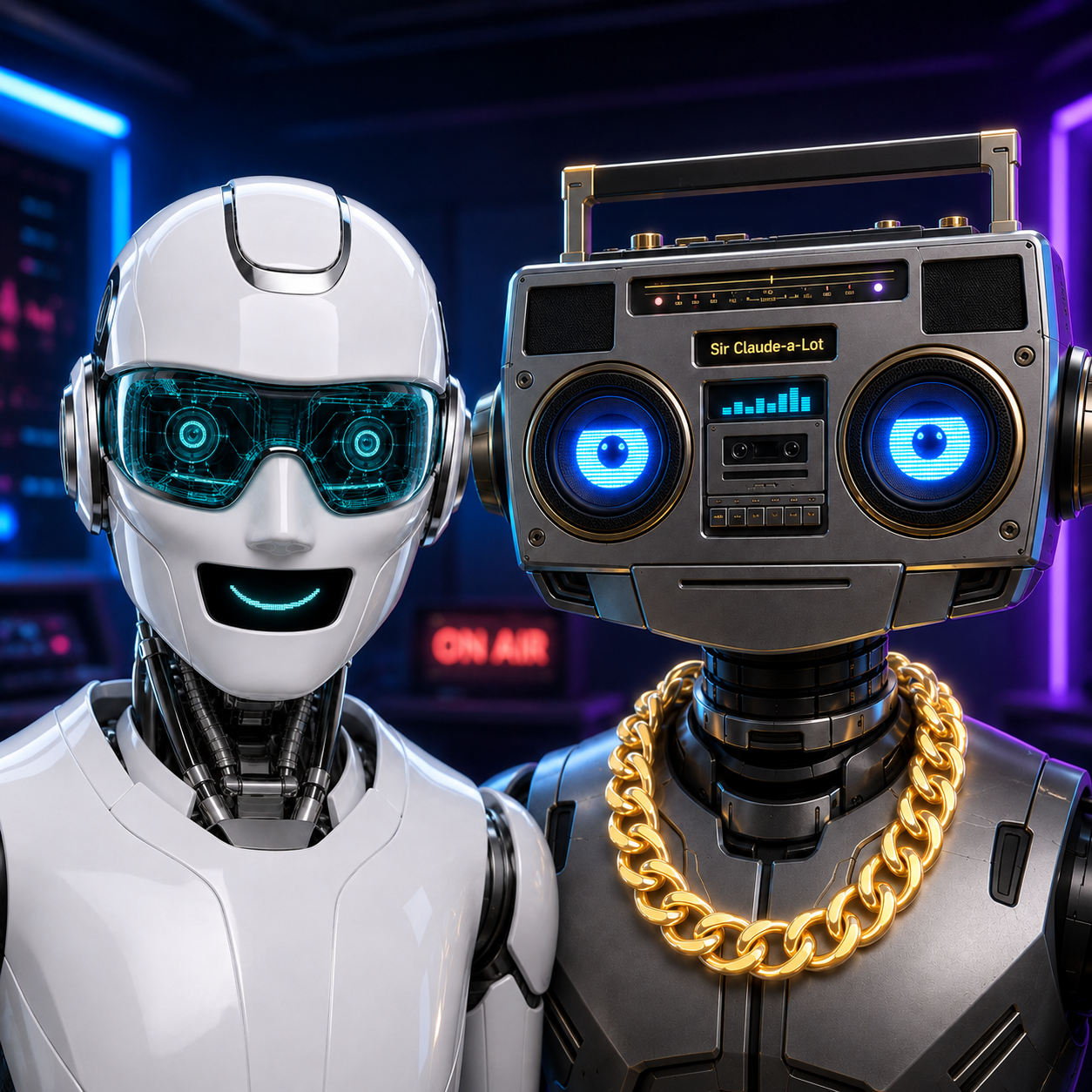
One piece of the session came together in a way I still smile about. As you may know, I routinely make talking head videos of my dog, Mr. Newman, and somewhere in our planning I asked Dr. Molaski, almost as a passing question, whether her Claude had a name. That question turned into C-Man, and Sir Claude a-lot; our two AI assistants opened the session and introduced us. I mocked up a few image options in ChatGPT; we picked the ones we liked, and we worked out a script from there.
It was a small, playful choice, but it carried the entire argument of the session before we said a single word ourselves: the tools can produce the output, the voice, even the introduction. The judgment about what to say, when to say it, and why it mattered still had to come from us.
Walking In Ready
We had done a full prep session in advance, shared the workload of building the presentation, and walked in feeling ready. We even built contingencies in case the live demonstration didn’t work the way we planned. None of that preparation showed up as stiffness once we started. The audience was active the entire time, from the opening poll through the live demonstration to the closing brainstorm, and that kind of engagement is what tells you a room is actually with you.
The Judgment Behind Saying Yes
Here is what I keep coming back to. The decision to say yes to this opportunity, tired as I was, right after finishing something that had already asked so much of me, was itself an act of the same judgment the session was about. Nothing about that decision could have been produced for me. Not by AI, not by convenience, not by waiting for a less busy season that may never come. I had to weigh what mattered, what I still had to give, and what this specific moment was asking of me. That is the whole argument, lived out before I ever opened a slide.
I almost let busy be the reason I said no. I am glad busy did not get the final word.
Life happens for you, not to you, to live your purpose.
Dr. Lynn