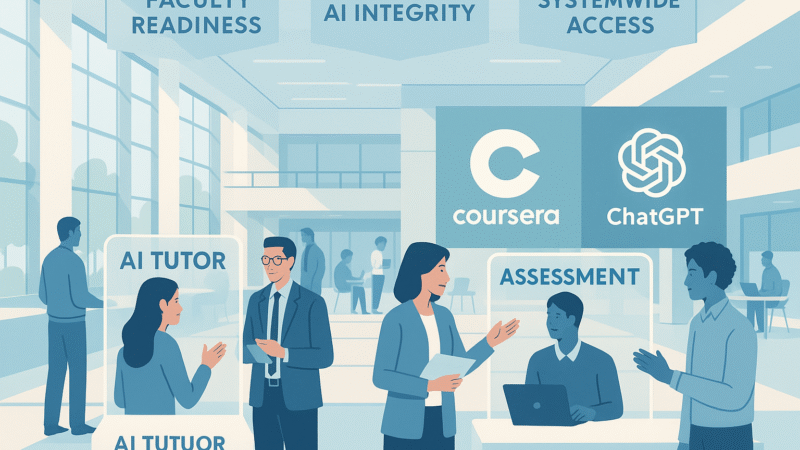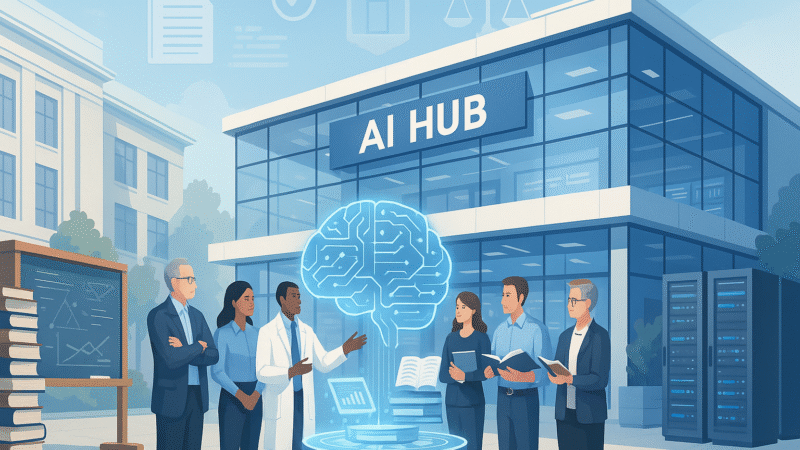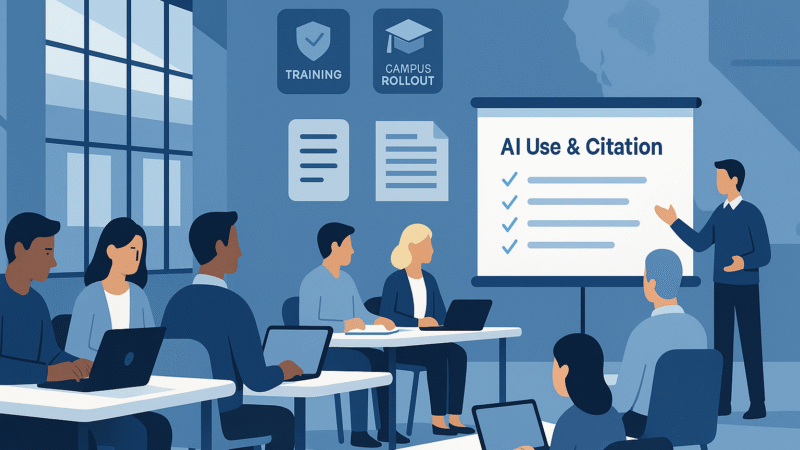
AI on campus shifted from trial runs to infrastructure. California institutions get free training from Google and Microsoft, Indiana University enables ChatGPT Edu for 120,000 users, and colleges push for clear rules, disclosure, and data safeguards. Plus Latam-GPT for regional access and Pearson study tools at scale.
Category: Higher Education
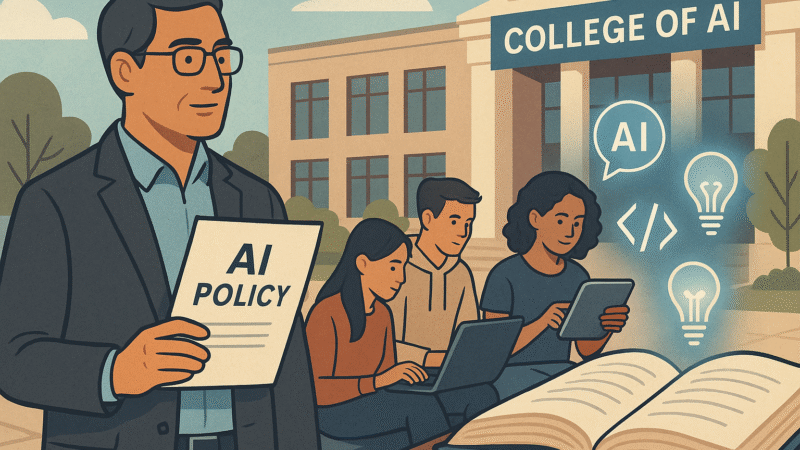
AI in higher education is no longer confined to pilot projects. This week, UTSA announced the launch of a College of AI, Microsoft integrated Copilot directly into LMS platforms, and universities advanced initiatives on governance, fluency, and student well-being. From new advisory boards to global skilling alliances, the momentum is shifting toward institutional readiness and balanced growth.
Higher education just got a double upgrade. With GPT-5 now the default in ChatGPT and Google’s NotebookLM embedded directly into learning management systems, AI is no longer an optional add-on. It’s sitting inside the same platforms faculty and students use every day. The challenge is no longer if these tools will shape learning, but how ready we are to teach with them in place.
GPT-5 hits campus tools as California expands AI training, UNESCO urges competency standards, and NSF funds traineeships—what should faculty update this term?
AI isn’t just reshaping how we learn—it’s exposing gaps in how we teach, lead, and build academic systems around it. From enrollment shortfalls to faculty skepticism and global AI education models, this week’s update spotlights what higher education must address to keep pace.
Investors, regulators, and educators advanced artificial intelligence across higher education this week—from a billion-dollar push for multilingual degrees to new grant-writing guardrails—showing that real progress pairs bold tools with clear, faculty-led governance.
Professors aren’t being pushed out by AI—they’re being invited to lead differently. As artificial intelligence reshapes the educational landscape, this piece challenges the notion of replacement and reframes faculty as mentors, designers, and ethical stewards of learning. From student connection to institutional strategy, discover why the most human parts of education are more valuable than ever—and how professors can use AI not to compete, but to elevate what only they can do.