As AI moves from pilot projects into everyday tools, real progress depends on faculty capacity. This piece centers instructors co-designing rubrics, syllabus policies, and course workflows—paired with LMS/Workspace integrations and emerging research infrastructure—so platforms amplify learning, integrity, and scholarship rather than replace human judgment.
Tag: academic integrity
AI on campus shifted from trial runs to infrastructure. California institutions get free training from Google and Microsoft, Indiana University enables ChatGPT Edu for 120,000 users, and colleges push for clear rules, disclosure, and data safeguards. Plus Latam-GPT for regional access and Pearson study tools at scale.
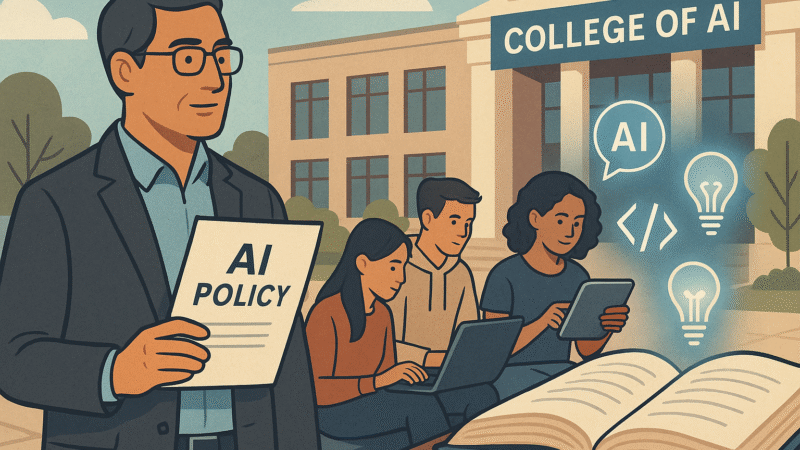
AI in higher education is no longer confined to pilot projects. This week, UTSA announced the launch of a College of AI, Microsoft integrated Copilot directly into LMS platforms, and universities advanced initiatives on governance, fluency, and student well-being. From new advisory boards to global skilling alliances, the momentum is shifting toward institutional readiness and balanced growth.
GPT-5 hits campus tools as California expands AI training, UNESCO urges competency standards, and NSF funds traineeships—what should faculty update this term?
As AI transforms higher education, faculty voices, ethical strategy, and global collaboration must take center stage. This article explores the real issues—from trust and inclusion to governance and pedagogy—that will define how we lead in an AI-driven world.
Faculty-led labs, interdisciplinary pilots, and inclusive tools aren’t just strategies—they’re signals that the future of AI in higher education will be shaped by those who teach, guide, and listen.
From free AI tools for students to ethical breaches in research and shifting faculty workloads, this week’s roundup reveals how higher education is both adapting to and helping shape the future of AI. The key? Responsible strategy, academic voice, and intentional leadership.