Higher education is entering a moment where decisions about AI use can no longer be put off or brushed aside. Leaders are confronting real pressure to define what responsible adoption looks like when policy gaps, equity concerns, and teaching quality…
Category: Digital Transformation
This week’s AI & Higher-Education Global Brief explores how universities are moving from experimentation to accountability. Featured research highlights a growing demand for governance frameworks that balance innovation with integrity. From faculty readiness and AI-tool adoption to student writing and accreditation reform, the focus is shifting toward strategy, not novelty. Institutions are now being called to demonstrate measurable responsibility in how AI shapes teaching, learning, and policy—signaling a defining moment for higher education’s digital maturity.
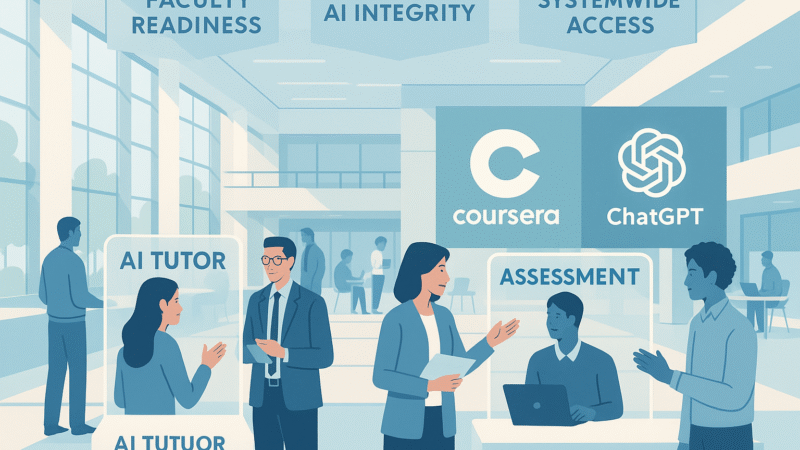
AI is no longer an experiment—it’s infrastructure. This week’s brief spotlights systemwide adoption across higher education, from California’s historic AI tutoring rollout to Coursera’s integration inside ChatGPT. Faculty now stand at the center of this transition: success depends not on the platforms themselves but on the readiness, reflection, and integrity guiding their use. Policy compliance, faculty capacity, and platform governance define this next phase of intelligent learning.
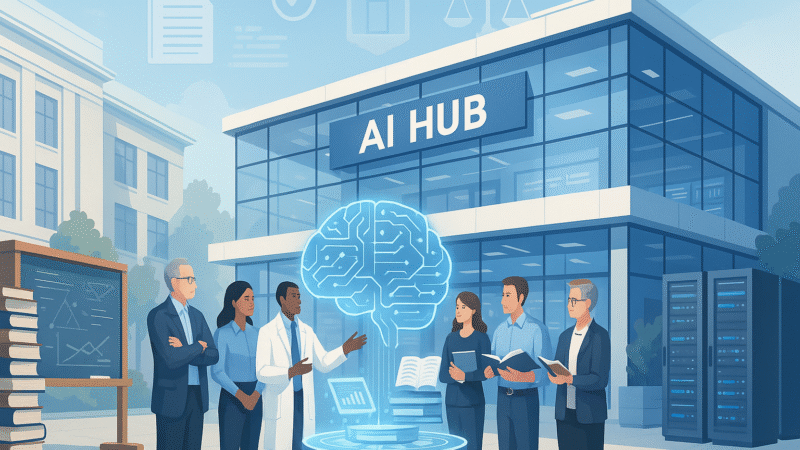
Institutions are moving beyond experimentation and into structured adoption of AI. Rice University’s new AI Hub and degree programs, paired with the AI Academy’s replicable faculty training model, show how infrastructure and literacy can be aligned. At the same time, global policies — from UNESCO’s guidance to India’s doctoral AI-use rules — highlight the urgency of building both trust and transparency. The lesson is clear: successful AI in higher education depends on linking strategy, faculty development, and governance into one coherent path forward.
As AI transforms higher education, faculty voices, ethical strategy, and global collaboration must take center stage. This article explores the real issues—from trust and inclusion to governance and pedagogy—that will define how we lead in an AI-driven world.
As AI becomes deeply embedded in research, writing, and teaching, this week’s headlines highlight both progress and pressure. From undisclosed academic AI use to billion-dollar industry shifts, today’s roundup explores why ethics, transparency, and strategy—not just speed—will define the future of higher education.
As AI-powered tools like ChatGPT gain traction, traditional search engines like Google could face growing competition. With the power to deliver quick, contextual answers, AI is changing how we look for information. Could AI replace Google, or is it simply shifting the way we search?