
Dartmouth’s provost resigns after a review of undisclosed AI use, Minnesota learning scientists warn careless AI use can undermine learning, and Cornell pairs broad AI access with required training. This week’s question: what can be delegated to AI, and who stays accountable?

Tag: research infrastructure
Georgetown’s ChatGPT pilot shows what faculty can lose when personal AI accounts move into enterprise workspaces, a Kazakhstan study links AI governance readiness to students’ intentions to stay enrolled, and federal grants fund AI capacity at UTPB, USF, Clark Atlanta, and Jacksonville University.
Two questions run beneath this week’s AI signals: whether institutions can keep assessment standards consistent, and whether their faculty, curriculum, and computing infrastructure are ready for the work AI now demands.
The AI conversation in higher education has shifted from what’s possible to what’s provable. Institutions are no longer praised for experimentation—they’re being measured by how well they govern it. This week’s strongest studies and policy reports show universities confronting a…
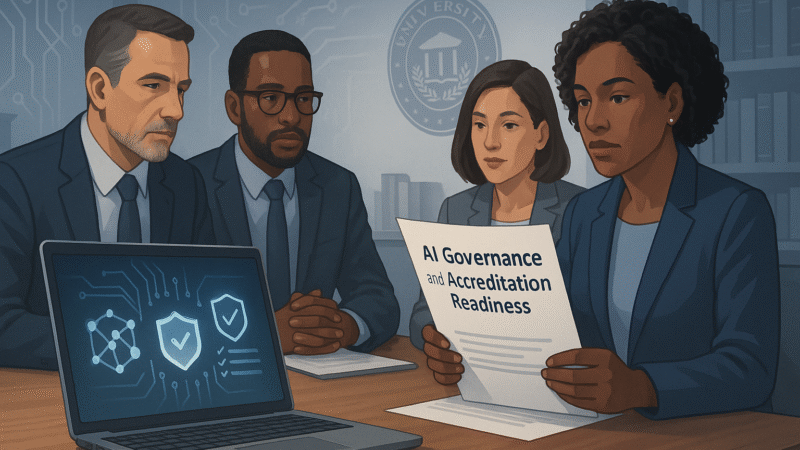
AI in higher education has shifted from novelty to obligation. This week’s brief spotlights accreditation and accountability: C-RAC’s sector-wide AI statement, UNESCO’s governance training, and concrete campus actions and research tools. The message is clear—institutions must evidence ethical use, faculty readiness, and data integrity to sustain credibility.
As AI moves from pilot projects into everyday tools, real progress depends on faculty capacity. This piece centers instructors co-designing rubrics, syllabus policies, and course workflows—paired with LMS/Workspace integrations and emerging research infrastructure—so platforms amplify learning, integrity, and scholarship rather than replace human judgment.