Responsible use cannot depend on individual caution alone. Leaders must create the authority, boundaries, and review practices that make responsible behavior possible.
Author: Dr. Lynn F. Austin
Lynn F. Austin is an author, educator, and EdTech consultant, and a doctoral candidate focused on AI strategy and innovation in higher education. With a foundation in faith and years of experience in business and education, Lynn helps people achieve their highest potential through practical strategy and clear communication. Her leadership in innovation and faculty development makes her a trusted speaker, coach, and business consultant. A valued voice in academic and business circles, Lynn writes frequently on AI in higher education and is the author of The BOM: Betting on Me, The Newman Tales series, and other business, motivational, and faith-based books. She equips professionals, educators, and students to thrive with purpose and lead with wisdom.
Technology access may start adoption, but leadership, workforce preparation, governance, and workflow design determine whether AI becomes useful.
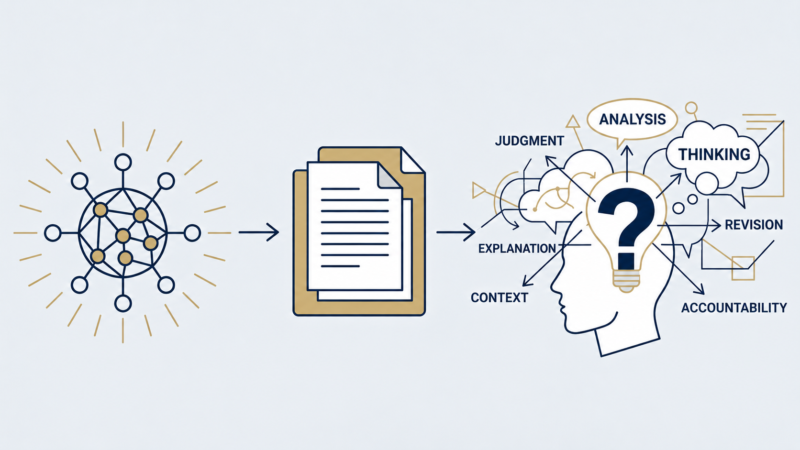
AI didn’t create the assignment problem in higher education—it revealed it. A practical framework for faculty to redesign coursework around judgment, accountability, and visible thinking in an AI-shaped academic environment.
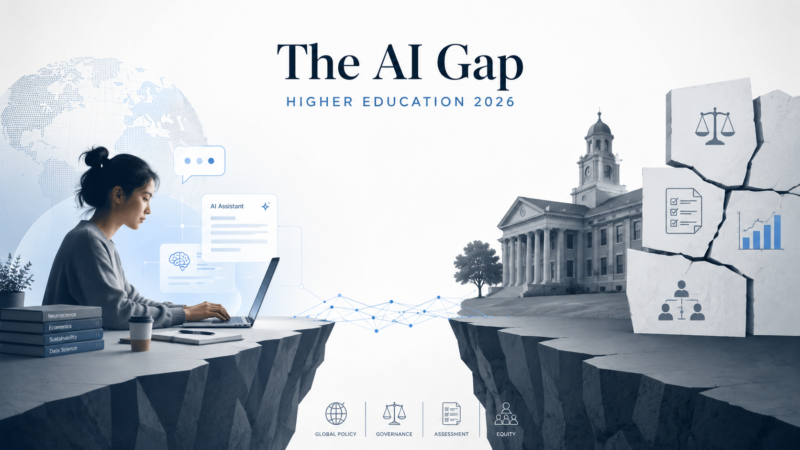
Higher education is living in a polarized AI landscape — students have embraced AI at extraordinary speed while institutions remain inconsistent, under-resourced, and reactive. This week’s brief captures AAC&U’s AI Week, HEPI’s landmark 2026 student survey, ETS’s first AI teacher assessment tool, UNESCO’s Latin America observatory launch, and a striking new equity dimension in AI adoption.

Higher education’s AI conversation is shifting from frantic adoption and surveillance toward governance, faculty development, and human-centered design. This week’s global evidence—from a 30,000-respondent LATAM survey to a major ethics synthesis—maps what accountable integration now requires.
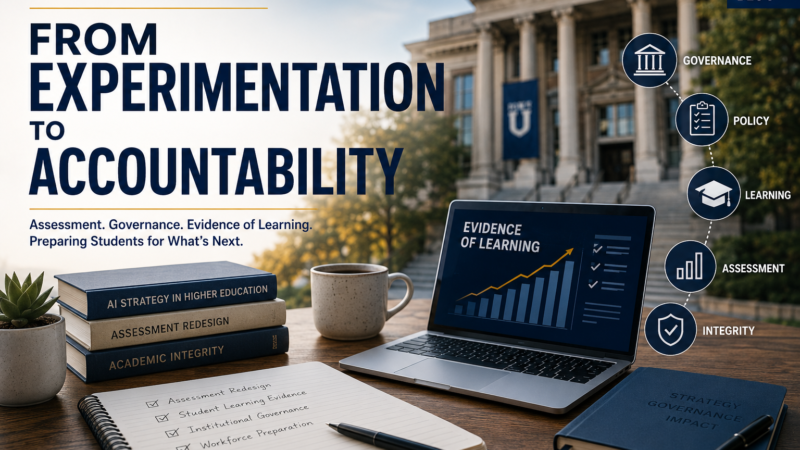
Higher education’s defining shift this week: from AI experimentation to institutional accountability. A new Science study of 95,513 students calls for assessment reform over detection, HEPI reviews 96 university AI policies, and Berkeley Law takes a restrictive stance.

Higher education is living in a polarized AI landscape — students have embraced AI at extraordinary speed while institutions remain inconsistent, under-resourced, and reactive. This week’s brief captures AAC&U’s AI Week, HEPI’s landmark 2026 student survey, ETS’s first AI teacher assessment tool, UNESCO’s Latin America observatory launch, and a striking new equity dimension in AI adoption.