Tag: AI in higher education

As universities transition from experimenting with external AI tools to building and governing their own computational capacity, the conversation moves beyond innovation hype to questions of ownership, governance, equity, and academic responsibility. This episode explores what it means for institutions to treat AI not as a rented service, but as core academic infrastructure.

The episode also addresses the risks of unchecked AI adoption, including silent skill erosion, uneven quality assurance, and growing regulatory complexity. With state transparency laws, accreditation expectations, and geopolitical considerations accelerating, higher education leaders can no longer delay decisions about AI governance and infrastructure.

AI & Higher-Education Global Brief: The Cognitive Drift – Hallucinating with Machines

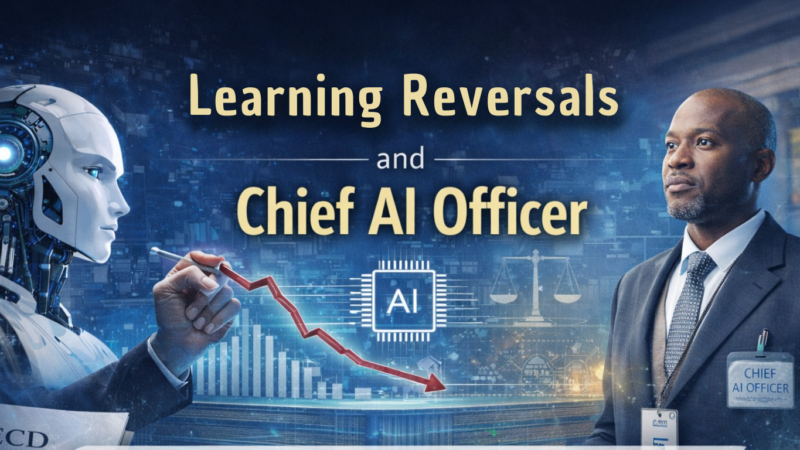
Global higher education is entering a new accountability phase. Evidence from the OECD signals “learning reversals” when AI is used without structured pedagogical design, while institutions integrating AI as a guided learning partner are reporting stronger retention and engagement. At the same time, the rapid rise of the Chief AI Officer reflects a shift from experimentation to executive-level governance. The central question is no longer access to AI, but whether institutions can convert AI usage into durable intellectual fluency backed by auditable oversight.

The discussion examines the shift from isolated pilots to campus-wide execution, highlighting how presidents, provosts, and academic leaders are aligning AI adoption with enrollment, workforce preparation, and institutional viability. Key themes include faculty readiness gaps, the growing demand for structured AI literacy, and the risks of uneven implementation without coordinated governance and professional development.

The episode also addresses emerging policy pressures at the state and federal levels, global equity efforts led by UNESCO, and new models for AI-enabled programs, research, and infrastructure. From AI study teams and writing centers to ethical concerns around bias, transparency, and data privacy, the conversation emphasizes that strategy, not speed, will define success.

AI & Higher-Education Global Brief:  The Agentic Trap – When AI Acts on Behalf of Students

This week’s AI & Higher-Education Global Brief highlights a decisive shift from experimentation to institutionalization. Across campuses, leaders are confronting mounting governance pressure, faculty workload strain, and assessment integrity concerns as AI adoption accelerates. The stories reveal a clear pattern: sustainable integration now depends less on tool deployment and more on policy clarity, infrastructure maturity, and faculty capacity building.

AI & Higher-Education Global Brief: Betting on Governance Over Speed

As higher education moves beyond AI experimentation, a sharper tension is emerging between speed and stewardship. This week’s Global Brief examines how institutions are slowing down to address governance gaps, faculty trust, and accountability as AI shifts from pilot projects to embedded academic practice. The message is clear: sustainable AI readiness depends less on rapid deployment and more on clear decision rights, shared governance, and faculty-led academic integrity.

🧭 AI & Higher-Education Global Brief Wednesday, November 12

This week’s AI & Higher-Education Global Brief explores how universities are moving from experimentation to accountability. Featured research highlights a growing demand for governance frameworks that balance innovation with integrity. From faculty readiness and AI-tool adoption to student writing and accreditation reform, the focus is shifting toward strategy, not novelty. Institutions are now being called to demonstrate measurable responsibility in how AI shapes teaching, learning, and policy—signaling a defining moment for higher education’s digital maturity.

Back to top