
This week’s AI & Higher-Education Global Brief highlights a decisive shift from experimentation to institutionalization. Across campuses, leaders are confronting mounting governance pressure, faculty workload strain, and assessment integrity concerns as AI adoption accelerates. The stories reveal a clear pattern: sustainable integration now depends less on tool deployment and more on policy clarity, infrastructure maturity, and faculty capacity building.

Tag: AI in higher education
As higher education moves beyond AI experimentation, a sharper tension is emerging between speed and stewardship. This week’s Global Brief examines how institutions are slowing down to address governance gaps, faculty trust, and accountability as AI shifts from pilot projects to embedded academic practice. The message is clear: sustainable AI readiness depends less on rapid deployment and more on clear decision rights, shared governance, and faculty-led academic integrity.
This week’s AI & Higher-Education Global Brief explores how universities are moving from experimentation to accountability. Featured research highlights a growing demand for governance frameworks that balance innovation with integrity. From faculty readiness and AI-tool adoption to student writing and accreditation reform, the focus is shifting toward strategy, not novelty. Institutions are now being called to demonstrate measurable responsibility in how AI shapes teaching, learning, and policy—signaling a defining moment for higher education’s digital maturity.
The AI conversation in higher education has shifted from what’s possible to what’s provable. Institutions are no longer praised for experimentation—they’re being measured by how well they govern it. This week’s strongest studies and policy reports show universities confronting a…
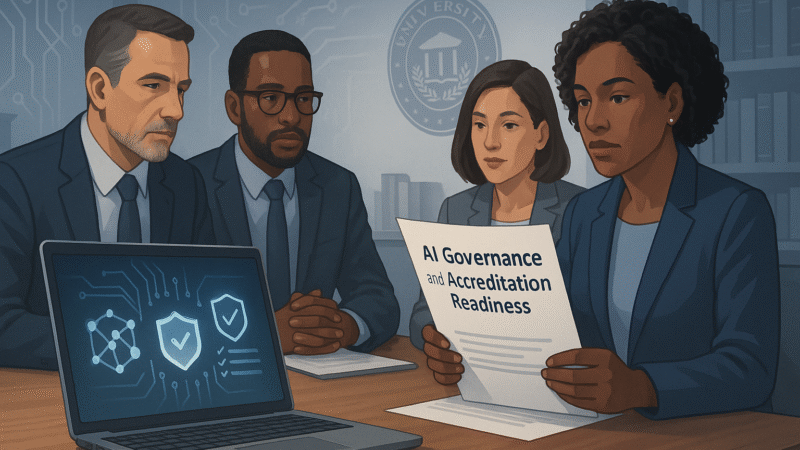
AI in higher education has shifted from novelty to obligation. This week’s brief spotlights accreditation and accountability: C-RAC’s sector-wide AI statement, UNESCO’s governance training, and concrete campus actions and research tools. The message is clear—institutions must evidence ethical use, faculty readiness, and data integrity to sustain credibility.
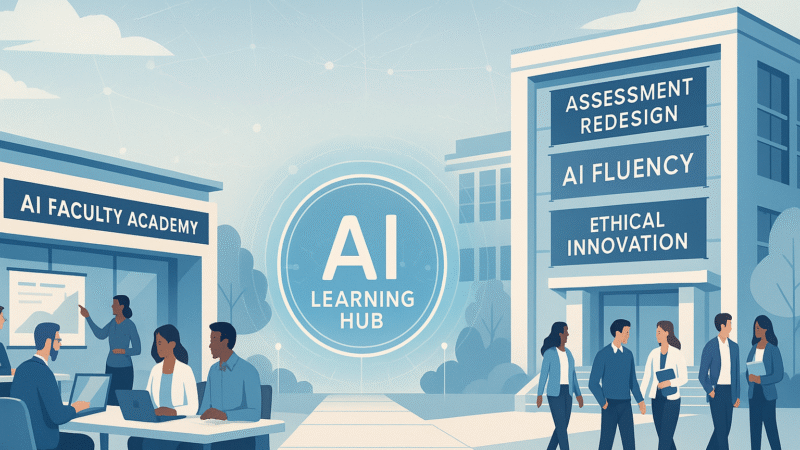
AI in higher education is no longer an experiment—it’s becoming the backbone of equitable learning systems. From California’s statewide AI tutoring program to global reforms in assessment and adult learning, colleges are redefining innovation around access, ethics, and educator leadership. This issue spotlights how faculty-led AI literacy and thoughtful policy are shaping a future where technology expands opportunity rather than replacing human connection.
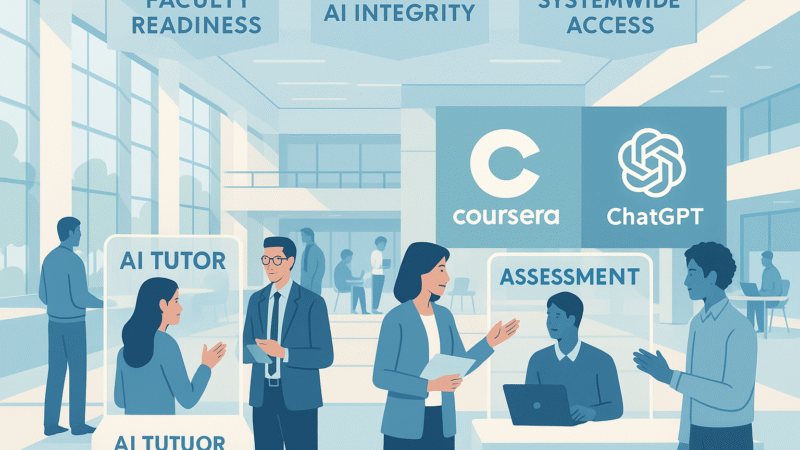
AI is no longer an experiment—it’s infrastructure. This week’s brief spotlights systemwide adoption across higher education, from California’s historic AI tutoring rollout to Coursera’s integration inside ChatGPT. Faculty now stand at the center of this transition: success depends not on the platforms themselves but on the readiness, reflection, and integrity guiding their use. Policy compliance, faculty capacity, and platform governance define this next phase of intelligent learning.